The moment I first realized something was wrong with my vision, I was on a trip in Vegas with my cousin, celebrating our birthdays.
The Strip was alive in that overwhelming way only Vegas can be—neon signs bleeding into the night, music spilling out of open doors, the constant movement of people brushing past us in every direction. I remember laughing at something my cousin said, then pausing mid-conversation because the world didn’t feel quite aligned.
It was subtle at first.
A slight distortion in my left eye, like a smudge I couldn’t blink away. Streetlights seemed to stretch longer than they should have. Faces in the crowd felt just a fraction less defined on one side. I remember tilting my head, trying to “fix” it, assuming it was fatigue, dehydration, maybe just too many hours under flashing lights and dry casino air.
But underneath that rationalization was something quieter and more unsettling: the first real doubt that I could fully trust my own eyes to do the work I had built my life around.
At the time, I only noticed a slight shift. Nothing dramatic enough to fully alarm me—just enough to make me pause, to second-guess, to quietly wonder if I was imagining it.
I told myself I’d sleep it off.
But the day after I returned home, everything changed.
Within hours, I was in an emergency room under harsh fluorescent lighting that made everything feel even more disorienting. Nurses moved quickly around me, asking questions I had to concentrate harder than usual to process.
I remember lying back as they sedated me hearing murmuring of voices as I drifted off. It felt distant at first, like this story belonged to someone else’s life.
That moment reframed everything.
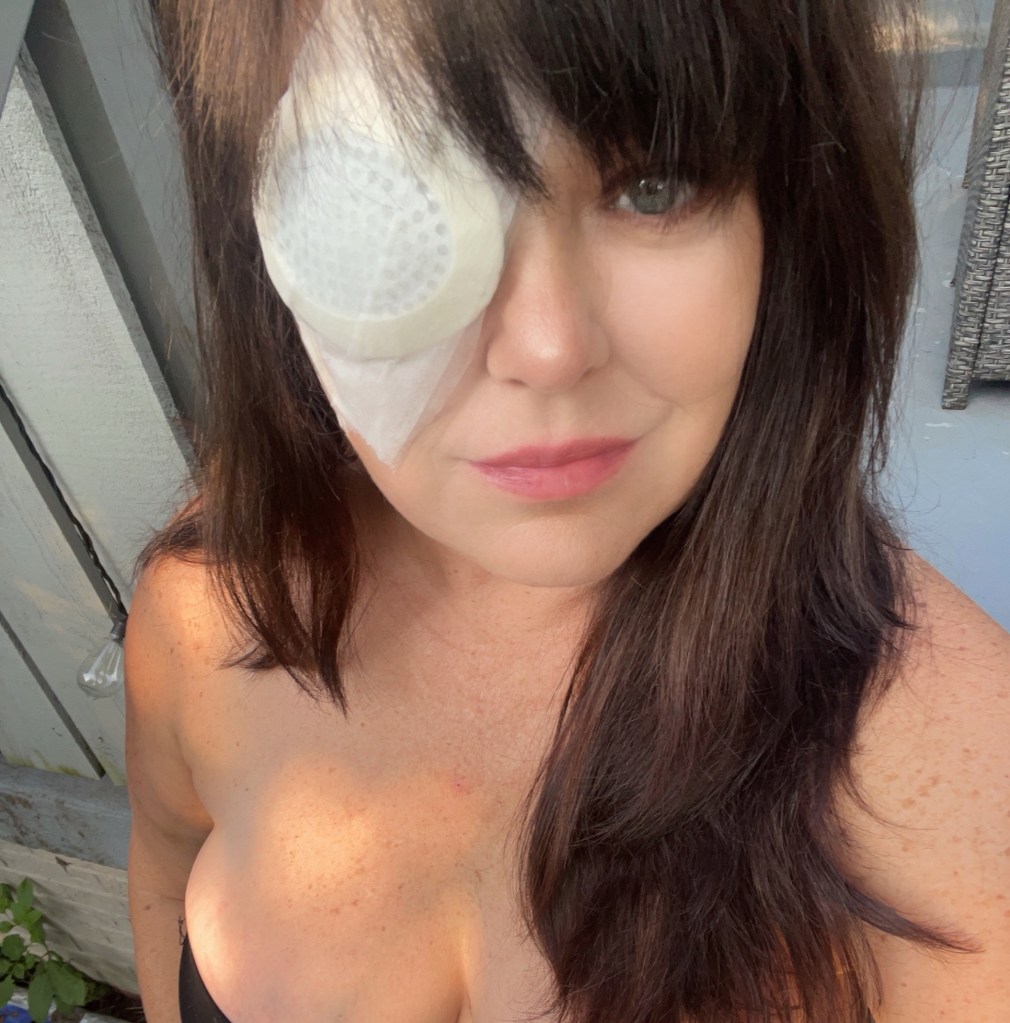
After losing a big chunk of vision in my left eye, I had to reorient myself—personally and professionally. At first, continuing photography felt almost ludicrous.
How could I keep building a life around “seeing” when I could no longer trust my vision in the same way?
Beneath the questions, the fear, the painful recovery—there was also a strange sort of gratitude.
I was grateful it wasn’t my lead eye—the eye I have always relied on behind the camera.
Grateful I could still see.
And what I began to discover over time was not a decline in ability—
but a refinement of it.
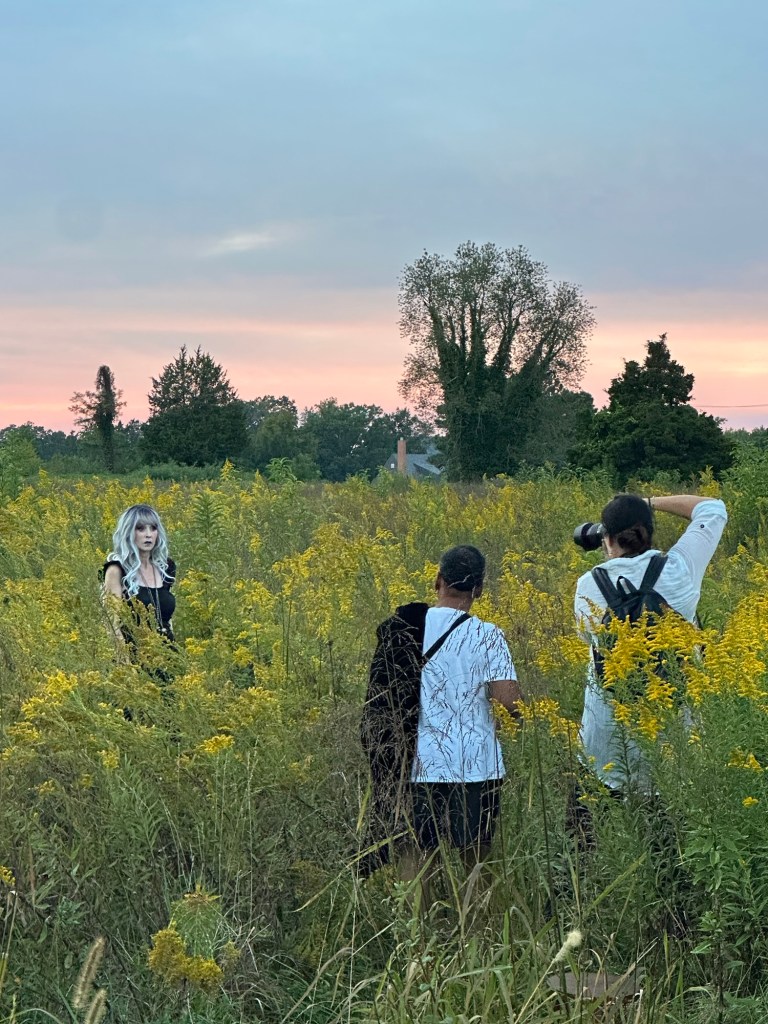
I became more deliberate in how I approached each session. My movements slowed, not from hesitation, but intention. I remember standing behind the camera during early shoots after surgery, consciously turning my head more, checking angles I used to instinctively trust. I would pause longer, letting the scene settle instead of rushing to capture it.
I relied less on split-second reaction and more on anticipation—learning to understand how a moment was forming before it fully arrived.
My memory of perspective had to strengthen. My spatial awareness had to evolve. I began listening more closely, sensing movement around me and trusting the internal map built through years of experience.
What had once happened automatically now required my full attention.
Awareness began to widen in unexpected ways.
Rhythm,
timing,
the quiet language between people—these became easier to sense, not harder.
I noticed the way a couple would subtly lean toward each other right before laughing, or how a parent’s hand would instinctively reach for a child’s shoulder before a moment of emotion even fully surfaced.
Emotional shifts revealed themselves sooner—
almost like I was reading the space between actions instead of just the actions themselves.
Scenes and poses were built with more patience. I would sometimes lower the camera entirely and simply watch a moment unfold—standing still in the middle of a ceremony or portrait session, letting silence do part of the work.
Instinct and experience began to carry more weight
than doubt ever could.
Today, I approach every session with more intention than ever.
The work is more observant, more deliberate. Less about reacting to what is seen and more about listening to what is unfolding.
Art in motion—shaped not by certainty, but by attention.
What changed was not my ability to create strong work,
but the way I reached it.
The process became more refined,
more considered,
more attuned to the quiet architecture of a moment.
There was absolutely a time when loss felt like it might take something essential from the work I adore. Instead, it revealed a different way of seeing—less dependent on a single point of perception and more rooted
in presence,
timing,
and trust
in what cannot always be immediately measured.
This is not a path I would have chosen.
But it is one that has taught me a different kind of clarity.
There were parts of my creativity, awareness, and intuition lying dormant—parts of myself I may never have been called upon to fully know.
Losing part of my vision did not create them, but it required me to reach for them.
To strengthen them.
To trust that there was still more within me than what had been lost.
And in that epiphany, clarity, and crazy revelation I realized something important become evident—
capability is not defined by what remains unchanged,
but by how deeply we learn to see through what has changed.
What I create now is not separate from this experience—it is shaped by it.
More intentional.
More attentive.
More human.
And deeply grateful to still be here, camera in hand, creating art.
I push on.
 B.Kindled
Leave a comment